Reserve Bank and MUSCCO Launch Global Money Week at Zingwangwa Secondary School
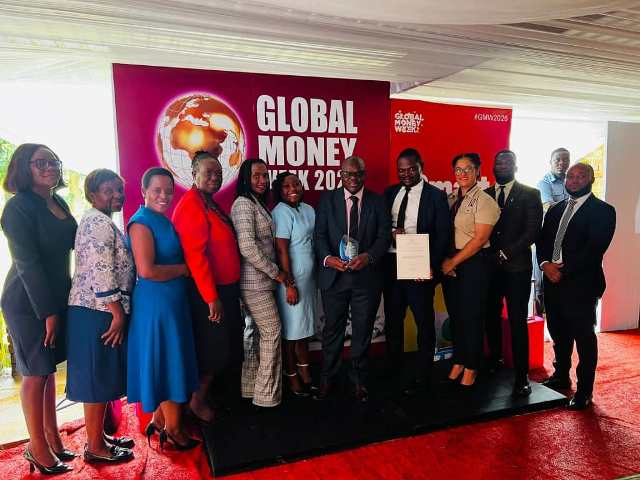
Blantyre, March 16, 2026 – The Reserve Bank of Malawi, Bankers Association of Malawi and other Financial Sector players working alongside the Malawi Union of Savings and Credit Cooperatives (MUSCCO), has launched Global Money Week at Zingwangwa Secondary School under the theme Smart Money Talks. The initiative seeks to empower young people with financial literacy skills and promote responsible money management as a cornerstone of Malawi’s Vision 2063.
Smart money talks — Keynote Address
In his keynote address, Dr Kisu Simwaka - Deputy Reserve Bank Governor emphasised that "Smart Money Talks" is more than a slogan. It is a call to action. It reminds us that financial success begins with asking the right questions, making responsible decisions, and committing ourselves to lifelong learning.
Global Money Week is not just an annual event. It is a global movement that unites millions of children, youth, parents, educators, and policymakers across more than 170 countries. Its mission is clear: to ensure that every young person has the knowledge, skills, values, and confidence to make responsible financial decisions.
This initiative aligns closely with Malawi’s National Financial Literacy and Capability Strategy (2024–2030), particularly Strategic Pillar One, which promotes financial literacy among school?going children, women, and persons with disabilities.
Yet, financial literacy remains a worldwide challenge. Less than 5% of children globally have access to structured financial education, and over 333 million children still live in extreme poverty. Without financial literacy, young people face greater risks—unmanageable debt, financial exploitation, and limited economic opportunities.
This week, the Reserve Bank of Malawi, in collaboration with key stakeholders, will intensify financial education activities targeting children and youth across the country. Together, we will strengthen the foundation for a financially literate generation.
Malawi has already made tremendous progress. Financial literacy education is now embedded in eight school subjects—Agriculture, Chichewa, Mathematics, Social Studies, English, Life Skills, Business Studies, and Home Economics. This integration ensures that financial knowledge is not an isolated lesson, but a lifelong skill woven into the fabric of our education system.
The Deputy Governor reminded participants to reaffirm their commitment to empowering the next generation. Let us ensure that every child in Malawi grows up with the confidence to manage money wisely, the resilience to overcome financial challenges, and the vision to contribute meaningfully to our nation’s prosperity he said.
Together, we are building the foundations of Malawi’s Vision 2063—an inclusive, wealth?reliant nation.
Financial Literacy for Dreams and Discipline
In her address, Mrs. Febbie Mwale, District Education Manager for the South West Division, emphasized that financial literacy is the pathway to achieving personal and national aspirations.
“When you learn to manage your finances, you can easily achieve your dreams,” she said.
She urged students that when they grow up loans should only be accessed when necessary, the youth should avoid borrowing for consumption, and instead focus on making informed financial decisions. She encouraged learners to invest even small amounts of pocket money from parents as a way of building future security.
She further called on teachers to embed financial literacy into daily lessons, ensuring that students grow up with lifelong money management skills. “This event should not be a once off,” she stressed, “but a continuous effort integrated into the teaching process.”
Smart Money Talks: Confidence and Inclusion
Representing the Bankers Association of Malawi, Mrs. Lyness Mkungula highlighted the broader vision behind the campaign.
“Smart Money Talks is about giving confidence,” she said, noting that financial literacy must be embedded across all levels of education—from primary schools to universities and vocational training.
Mkungula extended appreciation to the Government of Malawi and the Reserve Bank for introducing financial literacy programs into the secondary school curriculum. She underscored that financial literacy is not just about numbers, but about empowering generations to take charge of their future, make informed decisions, and contribute meaningfully to national development.
Expanding Access to Financial Solutions
Speakers also highlighted the role of financial institutions and innovations in expanding access to affordable financial solutions, particularly in rural communities. Mobile money operators are transforming access, microfinance institutions and MUSCCO are empowering small?scale entrepreneurs, while insurance companies are providing security for families.
Banks are extending their reach through agency banking and partnerships with digital platforms, building trust and sustainability in the financial system. Mkungula emphasized that financial inclusion is vital not only for access but also for strengthening confidence in Malawi’s financial sector.
Building Blocks for Vision 2063
The Smart Money Talks campaign was described as more than an awareness drive—it is a building block toward Malawi’s Vision 2063, which envisions an inclusive and wealth?reliant nation.
Global Money Week 2026 is therefore a call to action: to empower young people, expand financial inclusion, and ensure that every Malawian has the skills and opportunities to manage money responsibly and contribute to national prosperity.